SHE SOARS
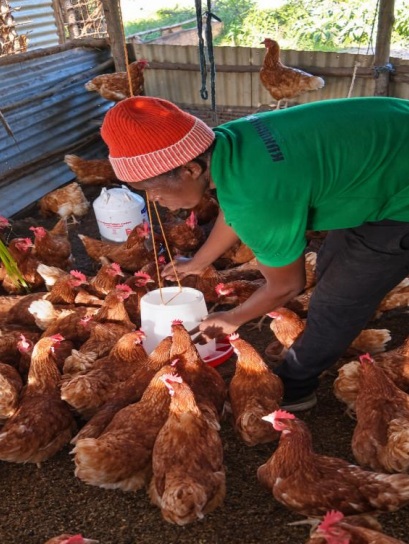
SHE SOARS supports out-of-school adolescent girls and boys aged 10-19 with sexual and reproductive health education, life skills, savings, livelihood training and stronger links to responsive health services. NTC implements the project in Arua City and Madi-Okollo with support from Canada through CARE International in Uganda.
Supporting the UN Sustainable Development Goals
Background & Need
SHE SOARS — Sexual and Reproductive Health & Economic Empowerment: Supporting Out-of-School Adolescent Girls' Rights and Skills — is a seven-year initiative launched in 2021 to help out-of-school adolescent girls and boys aged 10-19 make informed health choices, strengthen life skills and build financial resilience.
In Arua City and Madi-Okollo District, Naguru Teenage Centre combines adolescent sexual and reproductive health and rights programming with savings, livelihood skilling, responsive health services and community accountability, reaching young people outside school while strengthening the systems around them.
Toll-free feedback shows strong demand for trusted information on body changes, menstruation, family planning and contraceptive methods, while the project continues to address participation barriers such as limited disability inclusion and weak caregiver support for some adolescents in skilling.
Funded by the Government of Canada through CARE International in Uganda, as part of a wider consortium with Reach Out Mbuya, Fond Trust Agency and Restless Development.
Objectives
Provide inclusive and holistic adolescent sexual and reproductive health and rights, life skills and financial-literacy programming for out-of-school adolescent girls and boys aged 10-19.
- Increase equitable use of sexual and reproductive health and rights services, particularly among out-of-school adolescent girls and other rights holders.
- Strengthen gender-responsive, adolescent-responsive, inclusive and accountable health services delivered by health-care providers.
- Improve the capacity of key stakeholders, especially women's and girls' rights organisations, to advocate for evidence-based, equitable and accountable policies, legal frameworks and services.
Target Groups
- Out-of-school adolescent girls and boys aged 10-19, particularly girls and young people facing barriers to services.
- Peer educators, health-care providers, caregivers and local leaders who act as secondary beneficiaries and change agents.
- Community structures and rights organisations engaged as partners in advocacy and accountability.
The programme reports 2,186 members across its girls' and boys' SRH groups, including 11 girls and seven boys living with disabilities.
Areas of Implementation
Arua City and Madi-Okollo District, working through NTC as part of a wider consortium with Reach Out Mbuya (Kampala), Fond Trust Agency (Terego) and Restless Development.
In Madi-Okollo, the programme reaches Anyiribu, Okollo Town Council, Okollo, Offaka, Uleppi, Pawor, Ogoko, Rhino Camp Town Council, Rhino Camp, Rigbo, Ewanga and Inde Town Council, working through supported health facilities including Anyiribu, Offaka, Okollo, Oyima, Pawor, Inde, Olujobo, Odobu and Ewanga Health Centre IIIs and Rhino Camp Health Centre IV.
Major Activities
- Formation and facilitation of girls' and boys' SRH groups, including graduation and gap-filling activities.
- Formation of Youth Savings and Loan Association (YSLA) groups, with training in income-generating activity selection, planning and management.
- Group-based attachment and skilling of adolescents in marketable trades.
- Training and reflection meetings for peer educators and Community-Based Trainers, alongside adolescent curriculum review.
- Community scorecards, action-point follow-up and mentorship or support supervision for health-care providers.
- Toll-free counselling and feedback, radio engagement, stakeholder consultations, community outreach and development of adolescent-friendly fact sheets.
Key Achievements
- 108 girls' and boys' SRH groups reaching 2,186 members — 70 girls' groups (1,330 girls) and 38 boys' groups (856 boys).
- 1,320 SRH group members graduated in Year 5, alongside 48 new girls' groups, 24 boys' groups and 24 YSLA groups, all at 100% of target.
- 680 adolescents reached with group-based marketable-skills activities (94% of target).
- 48 peer educators identified and trained (69% female, 31% male, including two refugees).
- 24 YSLA groups formed, with girls' groups reporting UGX 14,627,700 in savings and UGX 12,949,800 in loans, and boys' groups reporting UGX 9,751,800 in savings and UGX 8,633,200 in loans.
- 10 community scorecard activities and 10 provider mentorship or support-supervision visits completed, strengthening adolescent health-service delivery across eight sub-counties.
- A toll-free line recorded 135 calls on body changes, menstruation and family planning, shaping improvements to adolescent information and outreach.